What a professional pool leak inspection actually involves
Understanding the real scope of a leak inspection
A swimming pool that loses water faster than normal is more than a nuisance. It can signal damage underground, in the shell, or in the plumbing that runs beneath the yard. Many pool owners notice the drop first on the water level line, then wonder if evaporation or a real leak is the cause. A professional pool leak inspection separates guesswork from fact. It uses tools and trained observation to find where the water is going, how fast, and what needs to happen next.
The process is not a quick glance at the water level. It is a systematic check of the entire system, from the surface equipment to the buried pipes. Understanding what happens during that inspection helps you know what to expect, what the technician is looking for, and how the results lead to a repair plan.
Why a leak is not always obvious
A pool can lose an inch of water per day from a small underground crack that never reaches the surface. The water seeps into the soil and evaporates before it shows. On the other hand, a visible wet spot near the equipment pad might come from a loose fitting, not a structural problem. The first job of the inspection is to confirm that a leak actually exists and to rule out simple causes like high evaporation, a poorly adjusted auto-fill, or seasonal changes in temperature.
A professional leak inspection starts with a bucket test. The technician places a bucket weighted with water on the top step and marks the water level inside the bucket and the pool level. After 24 to 48 hours the two levels are compared. If the pool dropped more than the bucket, evaporative loss is not the whole story and a leak is likely. This simple check is the baseline for everything that follows.
Tools and equipment used during the inspection
Once a leak is confirmed, the technician brings in specialized testing equipment. A leak analyzer is the most common tool. It works by injecting a small amount of harmless colored dye or a non-toxic tracer into the water near suspected leak points. The technician watches where the dye moves. If it gets pulled into a crack or a joint, the location is identified. This method is often used around light niches, return fittings, skimmers, and the main drain.
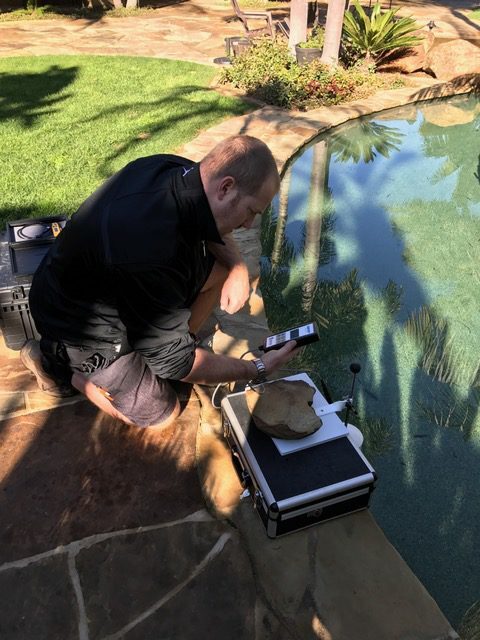
For underground plumbing, a different approach is needed. The technician pressurizes the pipe system with air or a test plug and listens for pressure drop. A listening disc or an electronic amplifier placed on the ground above the pipe can pick up the sound of water escaping under pressure. This technique is called acoustic leak detection. It is especially useful for finding leaks in the return lines or the suction line between the pump and the pool.
Thermal imaging cameras are also used in some inspections. They detect temperature differences between wet soil and dry soil. A cooler patch of ground along the pipe route can indicate water that is seeping out. These cameras do not show the leak directly, but they narrow the search area significantly.
What the technician checks beyond the water
A thorough inspection does not stop at the water. The pool structure itself is examined. The technician looks at the gunite or fiberglass surface for cracks, delamination, or signs of previous repairs that have failed. The tile line and coping joints are also inspected. Water can find its way through a hairline crack in the grout and travel down behind the shell, causing erosion that is invisible from inside the pool.
The equipment pad gets a close look too. The pump, filter, heater, and valves are checked for drips or moisture. A small drip from a pump shaft seal can lose a surprising amount of water over a week. The auto-fill mechanism is tested to see if it is stuck open, continuously adding water and masking a slow leak. The backwash valve on the filter is checked for proper seating. Any of these can create a false positive for a leak in the shell or plumbing.
The role of access points and underground plumbing
Many leaks occur in the underground plumbing that runs between the pool and the equipment pad. These pipes are buried and often run under decks or landscaping. Access points such as valve boxes, clean-out caps, and union fittings are the first places the technician examines. If a leak is suspected in a buried line, the technician may need to isolate sections of the pipe by closing valves or plugging lines. This process, called line isolation, helps pinpoint which pipe is losing pressure.

Once the leaking section is identified, the technician determines the best way to expose it. Sometimes a small excavation at the suspected location is needed. In other cases, the leak can be reached through an existing access point without digging. The inspection report will note the location and the likely cause, such as a corroded fitting, a root-damaged pipe, or a shifting soil that broke the joint.
What a professional inspection tells you
At the end of the inspection you receive a clear picture of the situation. The technician will explain the water loss rate and whether it is consistent with a leak or normal evaporation. If a leak is found, the location is described in terms you can understand, often with photographs or video from a small inspection camera inserted into the pipe. The scope of the inspection includes all the areas checked and any areas that could not be tested because of access limitations.
The report does not automatically include a repair estimate, but it gives the information needed to get one. Knowing the exact leak location and the type of repair required - whether it is a simple gasket replacement or a section of pipe to be excavated - allows a contractor to quote accurately. Without the inspection, a repair quote is just a guess based on symptoms.
When to call for a professional inspection
If you notice a steady drop in water level that does not stop after rain or cooler weather, it is worth scheduling a professional pool leak inspection sooner rather than later. A slow leak can worsen over time, eroding the soil under the pool shell or undermining the deck. The earlier the leak is found, the less damage it can cause to the surrounding structures.

For property owners in San Diego, Swim Care Pool Services provides specialized leak detection for residential and commercial swimming pools, spas, and related plumbing. Their technicians use the testing equipment and methods described here to locate leaks efficiently. The inspection scope covers the pool structure, the equipment pad, and the underground plumbing up to the access points.
Professional pool leak testing is not a service you need often, but when you need it, the accuracy matters. A thorough inspection saves you from unnecessary digging, repeated repairs, and the frustration of a pool that never holds its water. By understanding what the technician does and why, you can trust the process and make informed decisions about the next steps.